


HOLZ-HER EDGEBANDERS
Edgebander Machines for Woodworking & Cabinet Shops
Edgebanding is the transitional point where raw panel processing becomes a finished architectural surface. After CNC machining and panel sizing, exposed substrates must be sealed, trimmed, and refined to meet both structural durability and visual standards required in cabinetry, commercial millwork, and interior fixture production.
Within production environments across the Northeast, including New York, Massachusetts, Connecticut, and surrounding manufacturing regions, edgebanders are typically positioned immediately after panel processing and before sanding and finishing systems. This stage is critical because it determines both edge durability and the visual continuity of laminated or veneered materials under final coatings.
Coffey Machinery supplies a range of HOLZ-HER edgebanding systems designed for cabinet shops, furniture manufacturers, millwork facilities, and industrial woodworking operations across the Northeast. These systems are engineered to support everything from compact shop-floor production to fully automated, high-throughput panel processing lines.
Edgebanders for Cabinet Shops & Woodworking Professionals
Our HOLZ-HER edgebander solutions are commonly used for:
-
Kitchen and bathroom cabinetry
-
Office and commercial furniture
-
Custom millwork projects
-
Closet systems and built-ins
No matter your application, we help configure edgebanding systems that align with your production workflow, material requirements, and panel processing demands.
HOLZ-HER EDGEBANDERS | COFFEY MACHINERY


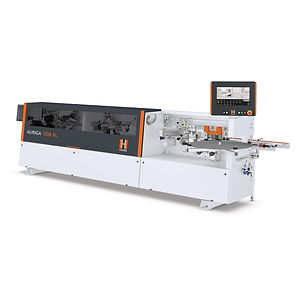


How To Choose the Right Edgebander
Selecting the right edgebander depends on your production volume, panel materials, automation requirements, and overall manufacturing workflow. High-production facilities often benefit from fully automatic edgebanding systems designed for continuous processing, faster feed speeds, and minimal operator intervention, while smaller shops may prefer compact or semi-automatic solutions that provide flexibility within a smaller footprint.
It’s also important to consider the types of edge materials being processed, including PVC, ABS, wood veneer, melamine, and specialty edging products, as different edgebanding machines are engineered to support specific material applications and finish requirements. Glue system configuration, trimming capabilities, corner rounding options, and automation features all contribute to final edge quality, production consistency, and throughput efficiency.
Shop layout and material flow should also be evaluated when selecting an edgebander to ensure proper workflow integration with upstream and downstream equipment. In many panel processing environments, edgebanders are integrated with beam saws, CNC machining centers, panel storage systems, and return conveyor solutions to create streamlined production lines with improved handling efficiency and reduced bottlenecks.
Our team can help evaluate your production goals, panel processing requirements, and automation needs to recommend the ideal edgebanding solution for your operation.
Benefits of Using an Industrial Edgebander
Investing in a high-quality industrial edgebander improves production efficiency, edge consistency, and overall finished product quality. These automated panel processing systems allow manufacturers to process significantly more components in less time compared to manual edge application methods while maintaining repeatable results across high-volume production runs.
Modern edgebanding equipment delivers clean, durable edge finishes that improve both product appearance and long-term durability. Precision trimming, accurate glue application, and automated finishing functions help reduce rework while improving consistency across cabinets, furniture components, millwork, and other panel-based products.
Advanced automation also reduces repetitive manual labor, helping manufacturers improve workflow efficiency, lower labor demands, and increase overall production throughput. In integrated production environments, industrial edgebanders are commonly positioned downstream from CNC machining centers and beam saw systems to support continuous panel processing and efficient material handling.
High-performance edgebanding systems also support greater flexibility by allowing manufacturers to process a wide range of panel sizes, edge materials, and production requirements with consistent quality and reduced setup times.
Watch how HOLZ-HER edgebanders help cabinet manufacturers improve efficiency, increase throughput, and streamline panel processing operations.
How Edgebanders Work in a Production Workflow
In a typical panel processing environment, edgebanders are positioned as a key step between cutting and final assembly. Once panels are dimensioned on a beam saw or shaped on a CNC machining center, they move into the edgebanding stage where exposed edges are finished for durability, appearance, and structural integrity.
The process begins as the panel is fed into the machine, where a precise layer of adhesive is applied to the edge. The edging material—such as PVC, ABS, veneer, or melamine—is then automatically applied under controlled pressure to ensure a consistent bond along the full length of the panel.
After application, integrated trimming units remove excess material from the top, bottom, and ends of the panel. Depending on the machine configuration, additional finishing stations may perform corner rounding, scraping, or buffing to produce a smooth, professional edge ready for assembly or downstream finishing.
In high-production environments, edgebanders are often integrated into automated material handling systems, allowing panels to flow continuously from cutting and machining operations into edge finishing with minimal manual intervention. This creates a more efficient production line with improved throughput and consistency.
When properly integrated into a workflow, edgebanding equipment plays a critical role in connecting CNC machining, beam saw cutting, and final assembly operations, helping manufacturers maintain quality while increasing overall production efficiency.
Why Choose Coffey Machinery?
Coffey Machinery supports cabinet, furniture, and millwork manufacturers across the Northeast—including New York, New Jersey, Pennsylvania, Massachusetts, Connecticut, Rhode Island, Vermont, New Hampshire, and Maine—with industrial edgebanding solutions designed to improve panel processing efficiency and finished edge quality.
In cabinet and furniture production environments, edge quality plays a critical role in both durability and visual consistency. We help manufacturers implement edgebanding systems that improve adhesive bonding, reduce visible glue lines, and maintain consistent edge application across high-volume panel production.
Our team works with woodworking operations to evaluate material types, production speed requirements, and automation levels in order to align edgebanding equipment with real-world manufacturing workflows, whether for compact shop-floor production or fully automated panel processing lines.


